Monday, June 24, 2024

A00025 - Angeles Florez Peon, Spanish Civil War's Last Militiawoman


Ángeles Flórez Peón, Spanish Civil War’s Last Militiawoman, Dies at 105

She was revered as an essential guardian of the country’s memory of war and repression long after the Franco dictatorship.

Listen to this article · 7:00 min Learn more
She is sitting on a red leather armchair next to a cabinet with framed photos on it. She has brown hair and is wearing an olive-green dress, a pearl necklace, a gold ring and gold bracelets.
Ángeles Flórez Peón in 2016. Her political engagement with Spain began after her brother Antonio, a Communist, was taken prisoner by the republic’s Civil Guard.Credit...Daniel More, via El Comerico

Ángeles Flórez Peón was 17 when she braved mortar and artillery fire to bring food to her fellow Republican volunteers in the trenches of northern Spain during the Spanish Civil War.

At 18, she was a nurse tending to the wounded in the doomed effort to save Spain from a military takeover. Nationalist troops attacked the hospital where she worked, in coastal Asturias, and she was later arrested and sentenced to 15 years in a women’s prison — marked forever, she said, by the memory of seeing fellow inmates being taken out at night and shot.

Ms. Flórez Peón died on May 23 in a hospital in Gijón, Asturias. She was 105. The Spanish press, which first reported her death, called her the last remaining militiawoman of the Spanish Civil War.

Pedro Sánchez, Spain’s Socialist prime minister, paid tribute to her on social media, writing, “105 years of dignity, commitment and struggle for equality, liberty and social justice.”

ADVERTISEMENT

SKIP ADVERTISEMENT

Last year, in regional elections in Asturias, Ms. Flórez Peón, at 104, was the oldest Socialist candidate on the ballot.

After her death, the daily newspaper El País wrote, “Her life straddled an era of intense emotions, of hopes, grand illusions and joys, the irruption of war, repression, enormous suffering, punishment and exile.”

Ms. Flórez Peón was known as Maricuela, the name of her character in a play she was in when Gen. Francisco Franco began his military uprising against the Spanish Republic in 1936.

She was celebrated not so much for her relatively modest contribution to the long-ago fight for the Spanish Republic as for representing the living memory of that period, one that still scars and fascinates her country.

ADVERTISEMENT

SKIP ADVERTISEMENT

Ms. Flórez Peón was a last militant vestige of her country’s stillborn modernization under the Second Spanish Republic, an eight-year democratic interlude between monarch and dictatorship that, with its promise of gender equality, was crushed by Franco, leading to his nearly 40-year rule.

Image
A black-and-white photo of a young Ms. Flórez Peón is featured on the cover of “Memorias de Ángeles Flórez Peón: Maricuela.” She is wearing a flower-patterned dress and a pearl necklace and is sitting sideways but is looking straight at the camera. Her left arm is resting on her lap while her right arm and hand are propped under her chin.
Credit...Fundación José Barreiro

“I count myself one of the lucky ones,” she said in 2018 at a book festival gathering in Madrid to celebrate a volume of her memoirs. Recalling the prisoners who were shot during her four years in the dreaded Santurrarán women’s prison in Guipúzcoa, she said: “I saw them go to their deaths. That’s why I’m shedding tears. Because I can talk about this, and I’m alive.”

Image
They are seen in separate sepia-toned headshots. He is wearing a suit and tie with a white dress shirt, and she is wearing a dress, a pearl necklace and earrings.
Ms. Flórez Peón and her husband, Graciano Rozada Vallina. They married in 1946. The next year, escaping detention by Franco’s police, he fled to France, and she soon followed him there. Credit...Ángeles Flórez Peón, via El Comerico

Ms. Flórez Peón’s political engagement with her country began with the murder of her 29-year-old brother, Antonio, a Communist who took part in an Asturian miners’ strike and uprising in October 1934. He became one of the so-called martyrs of Carbayín, 24 young men who met a violent death after being taken prisoner by the shaky republic’s Civil Guard. Thousands were killed in subsequent weeks of repression against socialists, communists and anarchists — a bloody prelude to the civil war.

“His death marked my life,” she said in an interview in 2013. “When my brother was murdered, I realized I had to do something.”

ADVERTISEMENT

SKIP ADVERTISEMENT

She joined the Juventudes Socialistas Unificadas, or United Socialist Youth group, and when Franco’s military staged its coup in July 1936, she heard loudspeakers in the main square of her town, Pola de Siero, calling for volunteers “to go defend the republic,” she recalled.

Ms. Flórez Peón went to work in a restaurant kitchen, helping to cook for the hastily organized Republican volunteers on the front lines. When she brought them food, “shots surrounded us from all sides,” she recalled, “but we were young and were not afraid of anything.”

Image
She is sitting on a red leather couch as she holds a birthday cake with three lit numeral candles to indicate her age. She is wearing a green leaf-patterned blouse and a gold necklace and earrings.
Ms. Flórez Peón celebrated her 101st birthday in 2019. “I was lucky to get out alive,” she said of her incarceration during the Spanish Civil War. “In prison, they humiliated us and starved us.”Credit...Juan Carlos Tuero, via El Comerico

As the front line drew nearer, women were moved further back. Ms. Flórez Peón was recruited to work as a hospital nurse in a converted match factory in Gijón, on the Bay of Biscay.

She and one of her sisters were put in charge of a ward with 30 patients, mostly wounded Basque militiamen. That lasted some two months, until the fall of Asturias in October 1937. Then came her arrest, a 15-minute court-martial and prison.

ADVERTISEMENT

SKIP ADVERTISEMENT

“I was lucky to get out alive,” she told El País in 2016. “In prison, they humiliated us and starved us.”

Ángeles Flórez Peón was born on Nov. 17, 1918, in Blimea, Asturias, to José Flórez Llusia, a miner, and Restituta Peón Iglesias, a midwife. Her parents separated when she was 9, and at 12 she was sent out to mop floors to help support her family.

“There was so much misery,” she said in the 2013 interview. “I couldn’t go to school or do any studies.”

She later apprenticed as a dressmaker.

Her boyfriend during the war, Quintin Serrano, a police officer for the republic, was shot and killed while she was in prison. “He left me a ring, a bracelet, and a letter,” she said.

The war ended with the republic’s defeat in April 1939, but she remained in prison under the Franco regime until August 1941. After her release, she found work in a pharmacy.

ADVERTISEMENT

SKIP ADVERTISEMENT

In 1946, she married Graciano Rozada Vallina, a miner and Socialist militant who had been seized by Franco’s police while serving with Republican forces but who managed to escape and flee to France the next year. She soon joined him there, in Saint-Éloy-les-Mines, where they lived until his death in 2003. That year, after 56 years in exile, she returned to Gijón to bury his ashes.

She is survived by her two children, María Ángeles Rozada and José Antonio Rozada, two grandchildren and one great-grandson.

Ms. Flórez Peón, who in her 90s was described by El País as “petite, smiling, charming, and walking with a firm step,” was delighted to pose for selfies at the Madrid book festival, where she presented her memoirs, “Memorias de Ángeles Flórez Peón: Maricuela” published in 2009, and “Las Sorpresas de Maricuela” (“Surprises of Maricuela”), from 2013.

“She wrote her memoirs in France,” Mr. Rozada, her son, said. “It was during those years after we had grown up. I think she started at the end of the ’70s. We got her a typewriter, and she learned how to use it. She was a woman with a lot of energy, and she had a strong desire to write. She wrote pages and pages. She thought it was important to write the memoirs of those who had died, so that today’s youth could share the memory.”

Ms. Flórez Peón remained committed to socialism, gender equality and gay rights. Her son recalled, “She always said: ‘Be careful. If we’re not united, the extreme right will come back.’” And she remained proud of her role as an essential guardian of Spain’s memory after decades of state-imposed forgetting during the Franco years.

“A country without a memory is a country without a soul,” she said. “Spain was soulless. We can’t forget, and we can’t resent. Because if we did, we become like them.”

Thursday, June 6, 2024

A00024 - Guillermo Erazo, Afro-Ecuadorian Musician and Marimba Player

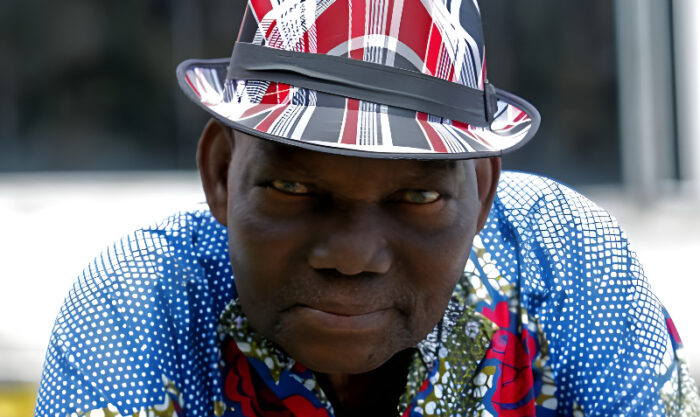
 Guillermo Ayoví Erazo (b. November 10, 1930, Borbon, Esmeraldas, Ecuador - September 10, 2022, Borbon, Esmeraldas, Ecuador) better known as Papá Roncón was an Afro-Ecuadorian musician, singer, and marimba player.

Papá Roncón was born in Borbón, Esmeraldas, Ecuador, on November 10, 1930. He learned to play the marimba at an early age with the Chachi people. He began to make himself known in the 1970s, first in his village, and then at national and international levels, with tours in the United States, Venezuela, Colombia and Japan. In 2001, he received the Premio Eugenio Espejo for his contribution to the Ecuadorian culture through the practice and teaching of the marimba and traditional dances. He also directed several films, including documentaries.

In July 2007, Erazo and Petita Palma were invited to Ecuador's National Assembly where a plenary session was conducted in honor of the two of them.

Erazo was the founder of the school of traditional culture 'La Catanga', through which he taught dozens of children and youth to play and dance marimba in the province of Esmeraldas. 

Erazo was married to his wife Grimalda for over 50 years, and they had ten children.

Papa Roncón died on September 30, 2022, in Borbón, Esmeraldas.

88888888888888888888888888888888888888888888888888888888888888888888888888

Papá Roncón falleció a los 92 años en Borbón, Esmeraldas

Uno de los referentes del folclore afroecuatoriano, Guillermo Ayoví, conocido como Papá Roncón', falleció este viernes 30 de septiembre del 2022. Tenía 92 años.

01 de octubre de 2022 - 05:09
El popular música Papá Roncón falleció a los 92 años. Foto: Archivo/ EL COMERCIO.
El popular música Papá Roncón falleció a los 92 años. Foto: Archivo/ EL COMERCIO. •

Uno de los referentes del folclore afroecuatoriano, Guillermo Ayoví, conocido como Papá Roncón’, falleció este viernes 30 de septiembre del 2022. Tenía 92 años.

Nacido en Borbón, Esmeraldas, el popular músico, cultivó la tradición de la marimba y con su música fue conocido en Ecuador. En 2011 obtuvo el premio Eugenio Espejo, el máximo galardón nacional de las artes.

Su aprendizaje de la marimba se fortaleció en su juventud. Se instruyó en la tradición del pueblo chachi, una comunidad indígena del norte de Esmeraldas.

En la década de 1970 comenzó a realizar giras en el país, con su grupo La Catanga. Con la ayuda de promotores musicales internacionales hizo viajes a Estados Unidos y Europa, donde fue reconocido.

Papá Roncón, un referente

El apodo de Papá Roncón tiene su origen en el pez guacuco, llamado también roncador. Ese pescado era el que vendía Ayoví por las calles de su natal Borbón, cuando era niño.

PUBLICIDAD

En 2017, el Municipio de Eloy Alfaro, norte de Esmeraldas, develó una estatua en honor a Guillermo Ayoví, que fue ubicada en el parque de Borbón, su tierra natal, en donde vivió la mayor parte de su vida junto con su familia.

Ayoví sigue dedicaba a la construcción de marimbas, palos de lluvias, cununos y guasás, instrumentos de la tradición afroecuatoriana en un taller cercano al cementerio de Borbón, donde tenía su residencia.

Hasta hace pocos meses se dedicaba a la enseñanza de la marimba, en la fundación que lleva su nombre, creada para enseñara a las nuevas generaciones los secretos de la música tradicional esmeraldeña.

Más noticias de cultura:


Saturday, August 15, 2015

A00023 - Leonel Maciel, Afro-Mexican Artist

Leonel Maciel (born March 21, 1939), an Afro-Mexican artist, member of the Salon de la Plastica Mexicana, from the coast of the state of Guerrero. Although from a rural area and farming family, he studied art at the Escuela Nacional de Pintura, Escultura y Grabaco "La Esmeralda" and has traveled extensively in Europe and Asia, which has influenced his work. His art has changed styles from generally contains multiple elements and saturated colors.
Maciel was born in the small village of La Soledad de Maciel, located in the municipality of Petatlan, Guerrero on Mexico’s Pacific coast.  He was born to a farm working family, in a palapa near the ocean. His family is of mixed African, Asian and indigenous roots, not uncommon for that region, the Costa Grande of Guerrero. He is a tall thin man, from family of tall people, stating that his great-grandparents were two meters tall or taller. One of these was Margarita Romero, called Negra Margarita who was African-indigenous ethnicity.
Maciel spent his early childhood on beaches and among mangroves. He began to draw and paint early, with his father encouraging him even though the region does not have a strong artistic tradition. His father also taught him to appreciate literature and he became fond of Hispanic-American literature and authors such as Alejo Carpentier, Pablo Neruda and Miguel Angel Asturias, which affected his artistry.
Maciel attended primary school for four years and at age ten went to Mexico City where he attended more classes up to high school but he did not study art although he had been drawing since he was a young child. Instead he worked odd jobs and sold some works that he drew or painted. These came to the attention of the Escuela Nacional de Pintura, Escultura y Grabado "La Esmeralda". He received a scholarship, studying there from 1958 to 1962.
Maciel believed that it is necessary for artists to see as much of the world as possible and be exposed to the work of other artists. His first journeys outside of Mexico included New York and Iceland, where he experienced an aurora borealis. He also spent three years in Europe, but did not use the time to visit museums and other artists. In 1995, he made an eight month journey through Asia in countries such as India, Bali, Thailand, China and Malaysia as well as the various Pacific islands. Elements of what he saw during this trip were then included into his work.
In 2007 Maciel worked on a project to document the cuisine of his native region which inspired a number of paintings.
Maciel lived in Tepoztlan from the 1980s into the 1990s when he began living in his native Guerrero state.

Maciel has had over forty individual and collective exhibitions of his work in countries such as Brazil, France, the United States and Portugal as well as Mexico. His first individual exhibition was as the Galería Excélsior in 1964.  His important collective exhibitions include “Art-Expo” in New York, Erótica ’82 at the Galería José Clemente Orozco and Contemporary Mexican Painters at the Picasso Museum in Antibes, France. He participated in the Myth and Magic of Latin America Biennal in Rio de Janeiro in 1979. Recognitions for Maciel's work include membership in the Salón de la Plástica Mexicana, retrospectives at the Museo del Carmen in Mexico City (2001) and the Museo de la Ciudad de México (2003) . In 2007 his home municipality had a ceremony to honor him.               

A00022 - Julia Lopez, Afro-Mexican Painter

Julia López (b. 1936) is a self-taught Mexican painter whose works depict her childhood home in the Costa Chica region of Guerrero state.  She was born in a small farming village but left early for Acapulco and Mexico City to find a better life. In the capital, she was hired as a model for artists at the Escuela Nacional de Pintura, Escultura y Grabado "La Esmeralda" and as such became part of the circle of notable artists of that time. Their influenced encouraged her to draw and paint, with Carlos Orozco Romero discouraging her from formal instruction as to not destroy her style. She began exhibiting in 1958 and exhibited individually and collectively in Mexico, the United States and Europe. Her work was recognized with awards and membership in the Salon de la Plastica Mexicana.  
López was born in 1936 in a small village near the town of Ometepec on the Costa Chica of Guerrero. She was one of eight daughters born to African and Amuzgo heritage parents. The parents were farmers, raising cotton, chili peppers, tobacco, sesame seed, bananas and other crops.
She has stated that she was blessed to have the childhood that she did, which would not have been possible in a big city. However, she wanted more in life and began her journey by going to Ometepec to work in a hotel called Casa Verde when she was only thirteen years old. In 1951, she moved again, this time to Acapulco, where she worked in a hotel kitchen. During this time she did not attend school but rather taught herself to read and do basic math.
Her final move was to Mexico City, finding initial employment modeling bridal and other formal dresses. This job allowed her to meet a number of people, especially from Coyoacan including a muralist that introduced her to Frida Kahlo in 1952. She gave her a card to present herself to Antonio M. Ruiz, then director of La Esmeralda. Her professionalism in her work allowed her to model for most of the well-known artists of the mid-20th century such as Jose Chavez Morado, Vlady and even Diego Rivera  at La Esmeralda and at the Academy of San Carlos.  
While doing this, she listened carefully to teachers’ comments to students and integrated herself with this artistic community. She initially remained very poor, along with her artist friends, which included Alberto Gironella, Hector Javier, Lauro Lopez, Vlady and Jose Luis Cuevas sharing accommodations, food and work. She began sketching on old bread wrappers images of saints, horses, seahorses and other familiar elements. She showed her work to Carlos Orozco Romero, who encouraged her novel style. She suggested an exchange whereby she would pose and he would teach her to paint. However, Orozco Romero convinced her that the classes would take away her spontaneity.
López developed her art career while continuing to pose in order to earn money for materials. She began exhibiting in 1958 and since then her work has been shown in various parts of Mexico, the United States and in Europe.  Her work can be found in the collections of over forty museums and galleries, but most of her work is in private collections in Mexico and abroad.
Her work was first recognized with a first place prize at a competition held at the Salón de la Plástica Mexicana. Later she received the New Vales Prize from the Fine Art Gallery of California. She is a member of the Salón de la Plástica Mexicana.
Three books have been written about her life and work Los colores mágicos de Julia López (1995), Fiori e Canti, Nella Pittura di Julia López (1996, in Italian) and Dueña de la luz (1998).

A00021 - Johnny Laboriel, Afro-Mexican Rock and Roll Singer

Johnny Laboriel (born Juan José Laboriel López, July 9, 1942 – September 18, 2013) was a Mexican rock and roll singer. His career started in 1958, when at 16 years old he joined the rock and roll group "Los Rebeldes del Rock". 
Laboriel died on September 18, 2013 from prostate cancer. 
Laboriel was the son of actor and composer Juan Jose Laboriel and actress Francisca Lopez de Laboriel. His parents were Honduran immigrants to Mexico from the Garifuna coast. He was the brother of bassist Abraham Laboriel and singer Ela Laboriel. 
In 2004, Laboriel was invited by Alex Lora to participate in the 36th anniversary of his band El Tri. The concert was presented at the Auditorio Nacional and was made into a CD and a DVD entitled 35 Años y lo que falta todavía
In 2006, Johnny Laboriel was invited by Luis Álvarez "El Haragán" to participate in the 16th anniversary of his band, El Haragán y Compañía. The concert was presented on November 3, 2006, also at Mexico City's Teatro Metropolitan. 
Johnny Laboriel died on 18 September 2013, in Mexico City, from prostate cancer. He was survived by his wife Viviane Thirion, and sons Juan Francisco and Emmanuel.